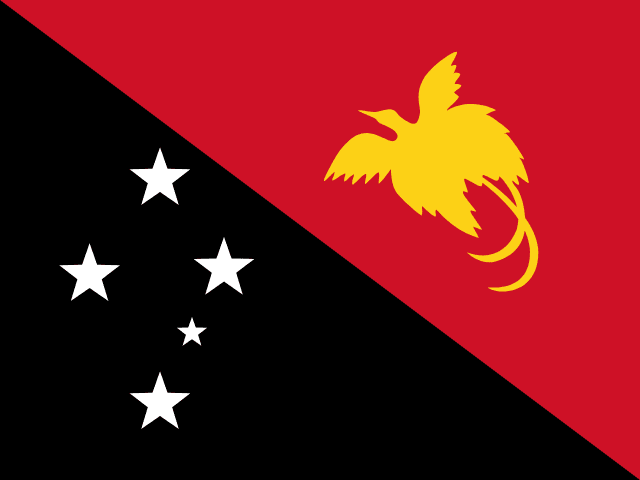
At a Glance
Alliances & Memberships
- Commonwealth of Nations
- Pacific Islands Forum
- Melanesian Spearhead Group
- ASEAN Regional Forum (observer)
- APEC
Foreign Policy Overview
Papua New Guinea's foreign policy is guided by the principle of 'friends to all, enemies to none,' emphasizing sovereign equality, non-interference, and peaceful resolution of disputes. The nation maintains a strong focus on regional cooperation within the Pacific, actively participating in the Pacific Islands Forum to address shared challenges like climate change and sustainable development. Key bilateral relationships include Australia, its largest aid donor and security partner, China, a significant trade partner and investor in infrastructure, and Indonesia, with whom it shares a land border and focuses on border management and economic cooperation. PNG also seeks deeper engagement with other emerging economies and traditional partners to diversify its economic and strategic interests, balancing various influences to safeguard national interests and promote regional stability.
Key Positions on Major Issues
Climate: Papua New Guinea is exceptionally vulnerable to climate change impacts, including rising sea levels, extreme weather events, and ocean acidification. Its position emphasizes urgent global action to reduce greenhouse gas emissions, strong support for the Paris Agreement, and the need for significant financial and technical assistance for adaptation, mitigation, and loss and damage mechanisms for developing island nations. PNG actively champions the voice of small island developing states (SIDS) in international climate negotiations. Security: Security policy is focused on internal stability, border security with Indonesia, and maritime surveillance to combat illegal fishing and transnational crime. Regionally, PNG advocates for a 'Pacific-led' security architecture, opposing external militarization of the region and emphasizing diplomacy and cooperation. While maintaining strong defense ties with Australia, PNG is also open to security cooperation with other partners that respect its sovereignty and contribute to regional stability without imposing undue influence. Human Rights: Papua New Guinea's human rights stance is generally aligned with international norms, though domestic challenges remain in areas such as gender-based violence, access to justice, and indigenous rights. In international forums, PNG typically supports resolutions promoting fundamental freedoms and human dignity, often emphasizing the rights of indigenous peoples and the importance of economic, social, and cultural rights as prerequisites for human development. Trade: Trade policy aims to diversify exports beyond raw materials, attract foreign investment, and integrate into regional and global value chains. PNG supports a rules-based multilateral trading system and engages in free trade agreements that offer equitable benefits. Key priorities include market access for its agricultural and fisheries products, value-adding industries, and sustainable resource extraction that benefits local communities. Regional: Papua New Guinea sees itself as a leader in the Pacific Islands region, actively promoting regional solidarity, economic integration, and collective action on shared challenges. It plays a significant role in the Pacific Islands Forum and the Melanesian Spearhead Group, advocating for regional solutions to issues like climate change, maritime security, economic development, and cultural preservation. PNG seeks to strengthen its ties with all Pacific neighbors and foster a secure, prosperous, and independent Blue Pacific Continent.
UN Voting Record Notes
Papua New Guinea generally aligns with the G77 + China bloc on economic and development issues, and with Pacific Island Forum members on climate change and ocean-related resolutions. On the Russia-Ukraine conflict, PNG voted in favor of UNGA resolutions condemning the aggression and demanding Russia’s withdrawal (e.g., ES-11/1, ES-11/2, ES-11/4, ES-11/5), reflecting a commitment to sovereignty and territorial integrity. On Israel-Palestine, PNG has historically maintained a nuanced position but often votes in favor of resolutions calling for a two-state solution and supporting Palestinian rights, while also acknowledging Israel's security concerns. On climate change, PNG consistently co-sponsors and votes for ambitious resolutions, advocating for stronger commitments from developed nations and support for vulnerable states. On human rights, PNG’s voting record generally supports universal human rights principles but may reflect domestic sensitivities on specific issues, often voting with the majority within the Asia-Pacific Group.
Economy & Trade
GDP Composition (approx.): Services (40%), Industry (35%), Agriculture (25%). Major Industries: Mining (gold, copper, nickel), oil and gas extraction, agriculture (coffee, cocoa, palm oil, copra, tea), fisheries, forestry. Top Exports: Crude petroleum, gold, copper ore, liquefied natural gas (LNG), timber, palm oil, coffee, cocoa. Top Imports: Machinery and transport equipment, manufactured goods, food, chemicals, fuels. Currency: Papua New Guinean Kina (PGK). Top Trade Partners: Australia, China, Japan, Singapore, South Korea, United States.
Military & Security
Active Personnel: Approximately 3,600 (Papua New Guinea Defence Force - PNGDF). Defense Spending: ~0.4% of GDP (2023 estimate). Alliances: Primary defense partner is Australia, which provides significant training, logistics, and intelligence support. PNG also maintains defense cooperation agreements with other regional partners and engages in multilateral exercises. Nuclear/WMD Status: Non-nuclear weapon state, signatory to the Treaty on the Non-Proliferation of Nuclear Weapons (NPT). Does not possess WMDs. Doctrine: Focused on border security, maritime surveillance, internal security, and humanitarian assistance/disaster relief (HADR). The PNGDF's role is primarily defensive and supportive of civil authority.
Recent History
Since gaining independence in 1975, Papua New Guinea's recent history has been shaped by efforts to consolidate national unity, manage resource wealth, and address internal challenges. The 1990s saw the Bougainville Crisis, a civil war fueled by grievances over resource distribution and autonomy, which concluded with a peace agreement in 2001 granting Bougainville greater autonomy and a pathway to a referendum on independence. The early 2000s marked the growth of the extractive industries, particularly LNG, bringing significant revenue but also challenges related to land ownership, environmental impact, and equitable distribution of benefits. Political stability has often been tested by frequent changes in government and coalition dynamics. PNG has also grappled with issues of corruption, law and order, and delivering essential services across its diverse geography. In recent years, the country has focused on economic diversification, infrastructure development, and strengthening its regional standing, while navigating increasing geopolitical interest in the Pacific.
International Memberships
- United Nations (UN)since 1975
Upon gaining independence, affirming national sovereignty and commitment to international peace and cooperation.
- Commonwealth of Nationssince 1975
As a former British protectorate, maintaining ties and shared values with other member states.
- Pacific Islands Forum (PIF)since 1975
Founding member, central to regional diplomacy, cooperation, and addressing shared challenges of small island developing states.
- Melanesian Spearhead Group (MSG)since 1986
Promoting economic cooperation, cultural exchange, and political solidarity among Melanesian states.
- Asia-Pacific Economic Cooperation (APEC)since 1993
To promote regional economic integration, trade liberalization, and investment with major Asia-Pacific economies.
- World Bank Groupsince 1975
To access development financing and technical assistance for poverty reduction and economic growth.
MUN Negotiation Profile
Generally aligns with the G77 + China on economic matters; strong alignment with Pacific Islands Forum on climate & oceans; non-aligned on major power rivalries.
Principled, emphasizes consensus, seeks practical and equitable solutions, prioritizes regional solidarity, firm on sovereignty.
- No external interference in domestic affairs or sovereignty.
- Unconditional recognition of climate change as an existential threat requiring urgent, equitable action.
- Protection of traditional knowledge and cultural heritage.
- Ensuring equitable distribution of benefits from resource extraction for local communities.
- Maintenance of a 'Blue Pacific' free from militarization and undue external influence.
- "'As a large ocean state, the health of our oceans is the health of our people; we must protect our marine resources from exploitation and pollution.'"
- "'Climate change is not a future threat for Papua New Guinea; it is a present crisis threatening our very existence, and the world must act decisively now.'"
- "'Sustainable development must prioritize the voices and rights of indigenous communities, ensuring that progress benefits all segments of our society.'"
- "'Regional solidarity within the Pacific is paramount; our collective strength is our greatest asset in addressing shared challenges and asserting our interests.'"
- "'We seek partnerships based on mutual respect and shared prosperity, not on geopolitical competition or the imposition of external agendas.'"