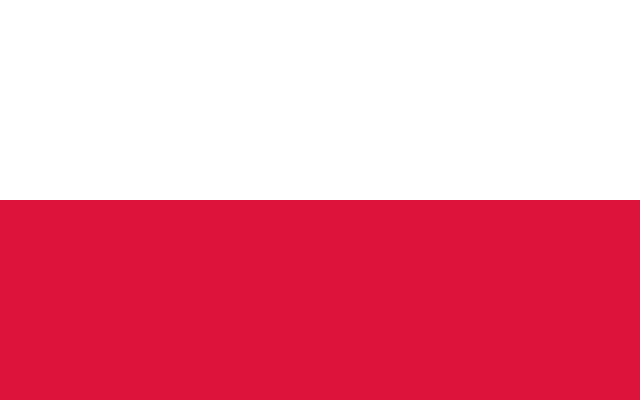
At a Glance
Alliances & Memberships
- NATO (North Atlantic Treaty Organization)
- European Union (EU)
- Visegrad Group (V4)
- Bucharest Nine (B9)
- Three Seas Initiative (3SI)
- OECD
- OSCE
Foreign Policy Overview
Poland pursues a doctrine centered on 'Atlanticism,' prioritizing a robust US military presence in Europe as the ultimate security guarantor. Warsaw views the Russian Federation as an existential revisionist threat, leading to a policy of maximal support for Ukrainian sovereignty and EU enlargement to the east. Domestically, Poland seeks to balance its deep integration within the EU single market with a staunch defense of national sovereignty against perceived federalist overreach from Brussels. Strategically, Poland aims to become the energy and logistical hub of Central Europe through the Three Seas Initiative. Relations with Germany remain complex, shaped by historical memory and current debates over defense spending and energy policy.
Key Positions on Major Issues
Climate: Supports the European Green Deal but advocates for a 'just transition' and nuclear energy expansion to replace coal dependence. Security: Demands permanent NATO basing on the Eastern Flank; advocates for the 'fortification' of the Suwalki Gap. Human Rights: Officially promotes democratic values while facing EU scrutiny over judicial reforms under previous administrations; maintains a conservative stance on social issues. Trade: Strong supporter of the EU Single Market but protects domestic agricultural interests, specifically regarding Ukrainian grain imports. Regional: Leads the B9 group to coordinate security policy across the former Eastern Bloc.
UN Voting Record Notes
Consistently votes with the EU bloc on human rights and trade. Regularly co-sponsors UNGA resolutions condemning Russian aggression (e.g., ES-11/1). Historically supports Israeli security while maintaining a nuanced stance on Palestinian statehood. Critical of UN mechanisms if they appear to undermine NATO's regional security role.
Economy & Trade
GDP Composition: Services (57.4%), Industry (40.2%), Agriculture (2.4%). Major Industries: Machine building, iron and steel, coal mining, chemicals, food processing. Exports: Machinery, transport equipment, furniture, plastics. Partners: Germany (28%), Czechia, France, UK. Currency: Zloty (PLN).
Military & Security
Active personnel: approx. 198,000. Defense spending: 3.9-4.2% of GDP (highest in NATO by percentage). Modernizing via 'Plan Modernizacji Technicznej' including Abrams tanks, F-35s, and Himars. Non-nuclear state under NATO nuclear sharing umbrella. Doctrine: 'Active Defense' against hybrid and conventional threats from the East.
Recent History
Over the last 30 years, Poland transitioned from a satellite state to a regional powerhouse. Joining NATO in 1999 and the EU in 2004 marked a definitive shift Westward. The 2010 Smolensk air disaster remains a pivotal national trauma. From 2015-2023, the Law and Justice (PiS) party dominated, leading to friction with the EU over rule of law. The 2022 Russian invasion of Ukraine transformed Poland into the primary logistical hub for Western aid, cementing its role as a key geopolitical actor. The 2023 elections saw a transition to a coalition government led by Donald Tusk, signaling a more cooperative stance within the EU.
International Memberships
- NATOsince 1999
Cornerstone of national security and territorial integrity.
- European Unionsince 2004
Primary economic driver; key player in regional development funds.
- Visegrad Group (V4)since 1991
Regional platform for Central European cooperation.
- Bucharest Nine (B9)since 2015
Founding member representing Eastern Flank interests.
- Three Seas Initiativesince 2016
Forum for infrastructure and energy connectivity.
MUN Negotiation Profile
Western / NATO / European Union (Eastern Flank)
Firm, security-centric, and principled. Poland often acts as the 'moral compass' for Eastern European security matters, using a proactive and sometimes assertive tone to ensure the region's concerns are not sidelined by larger Western powers.
- Any reduction or withdrawal of NATO presence on the Eastern Flank.
- Recognition of Russian territorial gains in Ukraine or a 'frozen' conflict.
- Unfunded EU climate mandates that ignore Poland's coal-reliant starting point.
- Erosion of national veto rights within the EU Council on critical security matters.
- "Poland reminds the committee that security in Europe is indivisible; a threat to Kiev is a threat to Warsaw and Berlin alike."
- "We call for an immediate end to energy dependency on autocratic regimes and the rapid expansion of nuclear infrastructure."
- "My delegation insists that any 'Green Transition' must be a 'Just Transition,' providing financial safeguards for the industrial heartlands of Central Europe."
- "Poland will not waver in its support for the territorial integrity of our neighbors; there can be no peace without justice."
- "We urge the international community to recognize the immense humanitarian burden Poland has shouldered and provide sustainable support for refugee management."