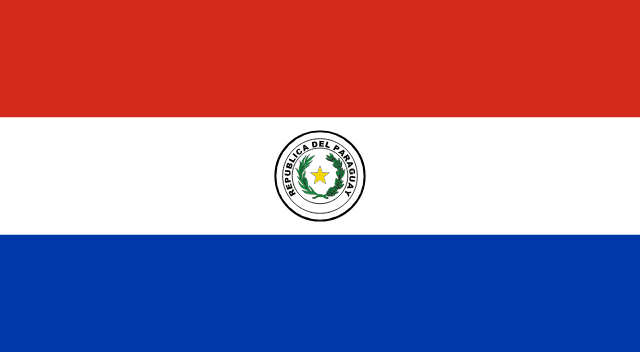
At a Glance
Alliances & Memberships
- UN
- OAS
- Mercosur
- CELAC
Foreign Policy Overview
Recognizes Taiwan (last in South America); embassy in Jerusalem (2024); soy and beef exports; Itaipú renegotiation with Brazil.
Key Positions on Major Issues
Taiwan recognition; pro-Israel (Jerusalem embassy); pro-US; soy diplomacy.
UN Voting Record Notes
Among most pro-US/Israel in Latin America.
Economy & Trade
Paraguay maintains a stable macroeconomy heavily dependent on agriculture, particularly as the world's 4th largest exporter of soybeans and a major beef producer. The economy is powered by massive hydroelectric exports from the Itaipu and Yacyretá dams, making it a global leader in renewable energy per capita. Major trade partners include Brazil, Argentina, and Chile, and the national currency is the Guaraní (PYG), one of the oldest in Latin America. Recent growth has been driven by infrastructure investment and an expanding light manufacturing sector under the "Maquila" regime.
Military & Security
The Paraguayan Armed Forces (Armed Forces of Paraguay) total approximately 15,000 active personnel with a focus on internal security and border control against smuggling. Defense spending remains modest at roughly 1% of GDP, prioritizing modernized riverine capabilities for the Paraguay-Paraná waterway. Paraguay is a non-nuclear state and a signatory of the Treaty of Tlatelolco, maintaining no WMD programs. Current doctrine focuses on "Internal Defense" to combat the EPP (Paraguayan People's Army) insurgency in northern departments.
Recent History
The last 30 years in Paraguay have been defined by the consolidation of democracy following the 1989 fall of the Stroessner dictatorship. The Colorado Party has maintained dominance for most of this period, except for the presidency of Fernando Lugo (2008–2012), whose controversial impeachment underscored domestic political tensions. In 2017, violent protests erupted over a proposed constitutional amendment to allow presidential reelection, which was ultimately withdrawn. Recent foreign policy has shifted toward aggressive "open for business" initiatives under the Mario Abdo Benítez and Santiago Peña administrations. Paraguay remains the only South American nation to maintain full diplomatic ties with Taiwan, resisting pressure from Beijing. The country has also dealt with increasing scrutiny regarding its role in the "Triple Frontier" drug trafficking and money laundering routes.
International Memberships
- MERCOSURsince 1991
Founding member; central to trade policy.
- Diplomatic Recognition of ROC (Taiwan)since 1957
Highest level of diplomatic recognition in South America.
- Organization of American States (OAS)since 1948
Active in regional development and democracy charters.
- United Nationssince 1945
Focus on landlocked developing country (LLDC) advocacy.
MUN Negotiation Profile
Pro-Western / Global South Landlocked Advocate
Pragmatic and legalistic, prioritizing regional consensus within MERCOSUR while fiercely defending sovereignty and its unique relationship with Taiwan.
- Abandonment of diplomatic recognition of Taiwan (non-negotiable for current administration).
- Sanctions or restrictions on hydro-energy sovereignty.
- Loss of preferential access for agricultural exports in regional blocks.
- "Advocating for the rights of Landlocked Developing Countries (LLDCs) to access international markets."
- "Promotion of sustainable development through 100% renewable hydroelectric power."
- "Strengthening international cooperation against transnational organized crime and human trafficking."