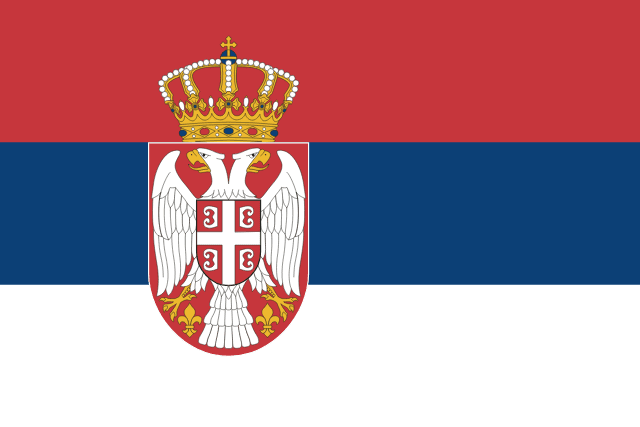
At a Glance
Alliances & Memberships
- UN
- OSCE
- CEFTA
- BSEC
- CoE
- PfP
Foreign Policy Overview
Serbia pursues a policy of military neutrality, maintaining close ties with both the European Union and countries like Russia and China. Its foreign policy is heavily shaped by the Kosovo issue, non-recognition, and maintaining regional stability through initiatives like the Open Balkan mini-Schengen area. Serbia aims for full EU membership while balancing its historical and economic relationships with non-Western powers, often navigating a complex geopolitical landscape with pragmatism.
Key Positions on Major Issues
Climate: Serbia is committed to implementing the Paris Agreement and increasing its share of renewable energy sources, aiming for climate neutrality by 2050, while facing challenges in decarbonizing its energy sector. Security: Serbia maintains military neutrality, participating in NATO's Partnership for Peace but opposing full membership, and seeks to balance military cooperation with various global powers. Human Rights: Serbia is a signatory to major international human rights conventions and works to improve its domestic human rights record, though challenges remain in areas such as media freedom and judicial independence. Trade: Serbia actively promotes free trade agreements, particularly within CEFTA and with the EU, aiming to boost exports and attract foreign direct investment, with a focus on diversifying its trade partners. Regional: Serbia is a key proponent of regional cooperation initiatives like the Open Balkan, advocating for economic integration and stability in the Western Balkans.
UN Voting Record Notes
Serbia often abstains or votes with Russia and China on resolutions critical of these countries, such as condemnations of Russia's invasion of Ukraine, demonstrating its balancing act between East and West. Conversely, Serbia generally aligns with EU positions on human rights and climate change resolutions. In 2022, Serbia voted against Russia's exclusion from the UN Human Rights Council but did vote to condemn the invasion of Ukraine in the UNGA. More recently, in 2024, Serbia voted in favor of a UN resolution calling for a humanitarian ceasefire in Gaza.
Economy & Trade
Serbia's economy is a middle-income service-based economy transitioning towards market orientation. Key sectors include manufacturing (automotive, machinery, food processing), agriculture, and services (telecommunications, IT). Major exports include vehicles, electrical machinery, corn, and fruits, primarily to Germany, Italy, Bosnia and Herzegovina, and Russia. Imports include petroleum, natural gas, machinery, and vehicles, mainly from Germany, Russia, China, and Italy. The Serbian Dinar (RSD) is the national currency. Significant economic challenges include high public debt, brain drain, and the need for further structural reforms.
Military & Security
The Serbian Armed Forces number approximately 28,000 active personnel with an additional 50,000 in reserve. Defense spending is around 2% of GDP (~$1.4 billion). Serbia maintains military neutrality and participates in NATO's Partnership for Peace (PfP) program but does not seek full NATO membership. It has strong military-technical cooperation with Russia and China. Key security concerns include the final status of Kosovo, regional stability in the Western Balkans, and combating organized crime. Serbia does not possess nuclear or WMDs.
Recent History
The breakup of Yugoslavia in the early 1990s led to a series of wars impacting Serbia, culminating in the Kosovo War (1998-1999) and the 1999 NATO bombing campaign. Following the fall of Slobodan Milošević in 2000, Serbia embarked on a path of democratic reforms and European integration. Montenegro separated from Serbia in 2006, leading to Serbia's full independence. Kosovo declared independence in 2008, a move not recognized by Serbia. In the 2010s, Serbia began EU accession talks, while simultaneously strengthening ties with Russia and China. The ongoing dialogue with Kosovo under EU mediation remains a central foreign policy challenge. In 2024, Serbia continued its economic growth and efforts towards EU harmonization, while facing pressures regarding its stance on the Russia-Ukraine war.
International Memberships
- UNsince 2006
Serbia joined the United Nations as a successor state to Serbia and Montenegro, inheriting the obligations and responsibilities of its predecessor, reflecting its commitment to international cooperation.
- OSCEsince 1973 (as Yugoslavia)
Serbia participates in the OSCE to promote security and cooperation across Europe, engaging in dialogue on human rights, economic, and environmental issues, as part of its broader European integration efforts.
- CoEsince 2003
Serbia joined the Council of Europe as part of its post-conflict democratic transition and commitment to human rights, aiming to align its legal framework with European standards.
- CEFTAsince 2206
Serbia is a member of CEFTA, aimed at promoting free trade and economic cooperation among non-EU countries in Southeast Europe, facilitating regional integration and preparing for EU membership.
- Partnership for Peace (NATO)since 2006
Serbia joined NATO's PfP program to enhance military cooperation and interoperability without seeking full NATO membership, aligning with its policy of military neutrality.
- World Banksince 2006
Serbia became a member of the World Bank Group as a sovereign state, obtaining access to financial and technical assistance for economic development and poverty reduction.
MUN Negotiation Profile
Serbia primarily balances between the EU and non-Western powers like Russia and China, often aligning with the EU on economic and some social issues, but maintaining independent positions on geopolitical matters related to its sovereignty and strategic interests.
Serbia often acts as a bridge-builder, seeking pragmatic solutions that accommodate its diverse foreign policy interests. It can be assertive on issues of national sovereignty, particularly regarding Kosovo, but generally prefers diplomatic engagement. Serbia typically seeks to form ad-hoc coalitions based on specific interests, rather than adhering to rigid bloc alignments.
- Recognition of Kosovo's independence
- Sanctions that severely impact economic ties with traditional partners
- Military alliance that compromises neutrality
- "My delegation firmly believes that the principle of territorial integrity must be universally respected, and as such, we reiterate our non-recognition of Kosovo's unilateral declaration of independence."
- "Serbia is committed to regional stability and economic prosperity in the Western Balkans, and we actively champion initiatives like the Open Balkan to achieve this."
- "We emphasize the importance of maintaining our military neutrality, allowing us to engage in constructive partnerships with all international actors without compromising our sovereign decision-making."
- "My delegation calls for a peaceful resolution to all international disputes through dialogue and adherence to international law, avoiding unilateral actions and coercive measures."
- "Serbia is actively pursuing its European integration path and remains dedicated to implementing the necessary reforms to achieve full EU membership, while also preserving its traditional friendships."