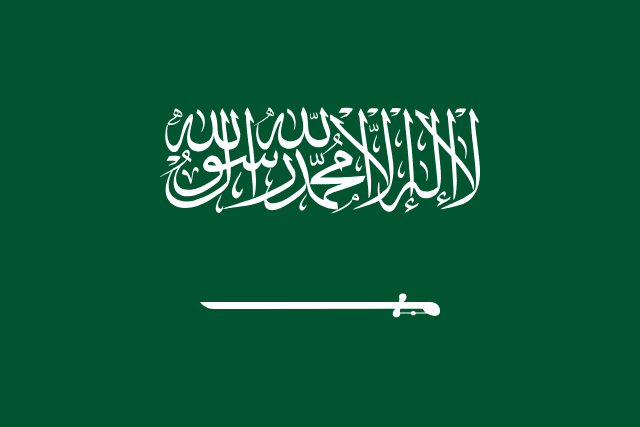
At a Glance
Alliances & Memberships
- OPEC+
- Gulf Cooperation Council (GCC)
- Arab League
- Organisation of Islamic Cooperation (OIC)
- G20
- Islamic Military Counter Terrorism Coalition (IMCTC)
- BRICS+ (Invited/Partner)
Foreign Policy Overview
Saudi foreign policy is guided by the 'Vision 2030' framework, prioritizing regional stability to protect economic diversification. Under Crown Prince Mohammed bin Salman, the Kingdom has shifted from traditional cautious diplomacy to a proactive, 'Saudi First' posture. This involves balancing a long-standing security partnership with the United States against growing economic ties with China and Russia (via OPEC+). Key pillars include maintaining leadership of the Islamic world, containing Iranian influence through the 2023 rapprochement mediated by Beijing, and resolving the conflict in Yemen. Riyadh positions itself as a global logistics and investment hub and a bridge between the Global North and South.
Key Positions on Major Issues
CLIMATE: Advocating for 'Circular Carbon Economy' (CCE). Rejects oil phase-outs; supports 'emissions-down' over 'oil-out'. Committed to Saudi Green Initiative (50% renewables by 2030). SECURITY: Focus on maritime security in the Red Sea and Persian Gulf. Strict opposition to non-state armed groups (Houthis, Hezbollah). Support for a Two-State solution for Palestine with East Jerusalem as capital. HUMAN RIGHTS: Maintains sovereignty over domestic legal frameworks based on Sharia. Rejects external interference in judicial matters. Emphasizing social liberalization (women's rights, entertainment) as part of Vision 2030. TRADE: Championing the Middle East Green Initiative and regional integration. Expanding non-oil trade through the Public Investment Fund (PIF). REGIONAL: De-escalation with Iran to ensure domestic stability for infrastructure projects (NEOM). Leadership in the Arab League regarding Syria's reintegration.
UN Voting Record Notes
Saudi Arabia regularly votes with the G77 and China on development issues. In the UNGA, it consistently supports resolutions condemning Israeli settlements. It voted for the ES-11/1 resolution deploring the invasion of Ukraine but has abstained on some subsequent votes regarding Russia to maintain its 'neutral mediator' status and OPEC+ cooperation. It leads OIC-aligned voting on social issues to prevent the expansion of LGBTQ+ rights language in UN documents.
Economy & Trade
GDP per capita: $32,500. Composition: Services (53%), Industry (44%), Agriculture (3%). Currency: Saudi Riyal (SAR) pegged to USD at 3.75. Major Exports: Crude petroleum (70%), refined petroleum, polymers. Key Partners: China (16%), Japan, India, South Korea, USA. Ongoing transition via 'Vision 2030' to diversify from oil to tourism, tech, and logistics.
Military & Security
Annual Expenditure: ~$75 billion (5th highest globally). Doctrine: Defense of the Two Holy Mosques and territorial integrity. Armed Forces: ~250,000 active personnel. No WMDs, but maintains a 'threshold' capability and interest in civilian nuclear energy. Security guarantor for the GCC. Major hardware supplier is the USA (F-15s, Abrams) but increasingly diversifying with Chinese and French technology.
Recent History
The last 30 years saw Saudi Arabia move from the 1990-91 Gulf War intervention to a period of internal Al-Qaeda threats in the 2000s. King Abdullah (2005-2015) began slow reforms, but the 2015 accession of King Salman and the rise of HRH Mohammed bin Salman (MBS) catalyzed radical change. The 2016 launch of 'Vision 2030' shifted the country toward social modernization. Key events include the 2015 intervention in Yemen, the 2017-2021 Qatar blockade, the 2018 Khashoggi crisis which strained Western ties, and the 2023 Iran-Saudi normalization deal. Most recently, the Kingdom has focused on hosting mega-events (Expo 2030, World Cup 2034) to signal global integration.
International Memberships
- United Nationssince 1945
Charter member; influential in Arab and Islamic voting blocs.
- Gulf Cooperation Council (GCC)since 1981
Founding member; headquarters located in Riyadh.
- Organisation of Islamic Cooperation (OIC)since 1969
Dominant member; hosting the Secretariat in Jeddah.
- OPECsince 1960
Founding member; central to the global energy market.
- G20since 2008
Only Arab member; critical to global economic governance.
MUN Negotiation Profile
GCC/Arab League/Global South Leadership
Assertive, pragmatic, and sovereignty-focused. Operates through high-level consensus and economic leverage. Expect Riyadh to lead the 'Like-Minded Group' on climate and sovereignty issues.
- Direct interference in Saudi domestic judicial processes or the Al Saud monarchy.
- Binding UN mandates for an immediate 'phase-out' of all fossil fuels without carbon capture technology.
- Any infringement on Saudi sovereignty over its internal security and counter-terrorism measures.
- Recognition of any Palestinian settlement that does not include East Jerusalem as the capital.
- "The Kingdom of Saudi Arabia reminds this committee that a realistic energy transition must include all technologies, including carbon capture, rather than the arbitrary exclusion of hydrocarbons."
- "We call for a regional security architecture that respects national sovereignty and puts an end to the sponsorship of non-state militias that destabilize the Middle East."
- "Under Vision 2030, Saudi Arabia is undergoing a historic transformation, and we invite the international community to engage with our progress rather than through the lens of outdated perceptions."
- "My delegation maintains that human rights must be viewed through a lens of cultural sensitivity and national context, consistent with our obligations under international law."
- "Global stability relies on the reliable flow of energy; Saudi Arabia remains committed to balancing the global oil market through the OPEC+ framework for the benefit of producers and consumers alike."