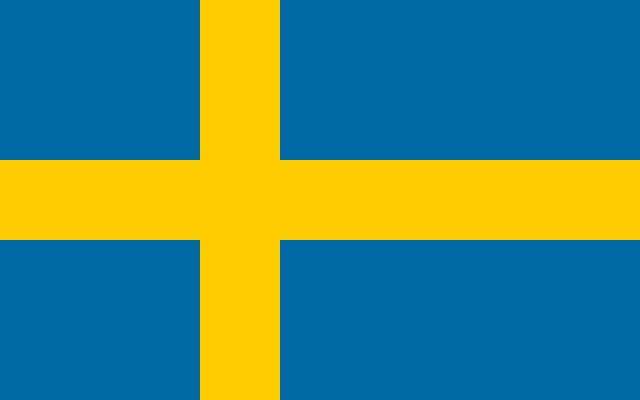
At a Glance
Alliances & Memberships
- EU
- NATO
- UN
- OECD
Foreign Policy Overview
Sweden's foreign policy is rooted in multilateralism, international law, and human rights. Traditionally non-aligned, the invasion of Ukraine prompted a significant shift, leading to its historic application and accession to NATO in March 2024. The nation prioritizes addressing global challenges like climate change, poverty, and conflict through active participation in international organizations. Key bilateral relations include strong ties with Nordic countries, EU member states, and the United States. Sweden also maintains a robust commitment to humanitarian aid and development cooperation.
Key Positions on Major Issues
Climate: Advocates for ambitious climate targets, renewable energy transition, and green technologies. Security: Recently joined NATO, emphasizing collective defense, transatlantic security, and regional stability in the Baltic Sea. Human Rights: Strong defender of human rights, democracy, and gender equality globally. Trade: Supports free and fair trade, active within the EU single market and advocating for open markets. Regional: Plays a leading role in Nordic cooperation and Baltic Sea regional initiatives, promoting peace and prosperity.
UN Voting Record Notes
Sweden generally aligns with EU consensus in the UNGA, often voting in favor of resolutions promoting human rights, disarmament, and environmental protection. For example, Sweden consistently voted with the majority against Russia's aggression in Ukraine, as seen in the March 2022 UNGA resolution condemning the invasion. On Israel-Palestine, Sweden tends to support resolutions advocating for a two-state solution and adherence to international law. Sweden has also been a consistent supporter of climate action resolutions within the UN framework.
Economy & Trade
Sweden boasts a highly developed, export-oriented economy characterized by a skilled workforce and advanced technology. Key industries include manufacturing (automobiles, machinery), information technology, telecommunications, and pharmaceuticals. Major exports include machinery, vehicles, wood products, iron and steel, and chemicals, with key trade partners being Germany, Norway, the United States, Denmark, and the UK. The currency is the Swedish Krona (SEK). Challenges include maintaining competitiveness and managing inflation.
Military & Security
The Swedish Armed Forces historically maintained a strong defense capability based on conscription and non-alignment, but their role has significantly evolved with NATO membership. Defense spending is projected to reach 2% of GDP by 2026. The nation focuses on territorial defense and contributing to international peace operations. Sweden does not possess nuclear weapons and is a strong proponent of nuclear disarmament. Key security concerns include Russian aggression in the Baltic Sea region and cyber threats. Its doctrine now emphasizes collective defense and interoperability within NATO.
Recent History
In 1995, Sweden joined the European Union, marking a significant step towards deeper European integration. The early 2000s saw Sweden actively participate in EU expansions and peacekeeping missions, while also maintaining its non-aligned status. The 2014 annexation of Crimea by Russia and the subsequent war in Ukraine in 2022 profoundly impacted Sweden's security policy. This led to a historic decision to apply for NATO membership in May 2022, officially joining in March 2024, ending over 200 years of military non-alignment. Domestically, Sweden has continued to grapple with issues of immigration and social integration.
International Memberships
- EUsince 1995
Accession driven by economic integration benefits and a desire for closer political cooperation with European partners after the end of the Cold War.
- UNsince 1946
Joined as an original member state, reflecting its commitment to international cooperation, peace, and humanitarian principles post-World War II.
- OECDsince 1961
Founding member, promoting economic growth, social well-being, and contributing to global economic governance and development.
- NATOsince 2024
Historic accession motivated by a fundamental shift in the European security landscape following Russia's full-scale invasion of Ukraine, prioritizing collective defense.
MUN Negotiation Profile
Within the EU, Sweden is often a proponent of human rights, environmental protection, and free trade. Following NATO accession, Sweden is a full participant in the alliance, aligning with collective defense and security interests. Sweden also actively cooperates within the Nordic bloc.
Sweden typically adopts a pragmatic and constructive negotiation style, often seeking consensus and bridge-building. While assertive on principles of human rights and international law, it aims for practical solutions. Sweden often forms coalitions with like-minded EU and Nordic partners to advance its agenda.
- Violation of national sovereignty and territorial integrity
- Undermining of international law and human rights
- Threats to the security of the Baltic Sea region
- "My delegation firmly believes that multilateral cooperation and adherence to international law are paramount for addressing global challenges."
- "Sweden is deeply committed to upholding human rights and promoting gender equality in all our foreign policy endeavors."
- "The recent unprovoked aggression against Ukraine underscores the critical importance of a robust collective defense, which informed our decision to join NATO."
- "We must accelerate global efforts to combat climate change, transitioning to sustainable economies and fostering green innovation."
- "My delegation emphasizes the need for peaceful resolution of conflicts, always upholding the principles of sovereignty and non-interference."