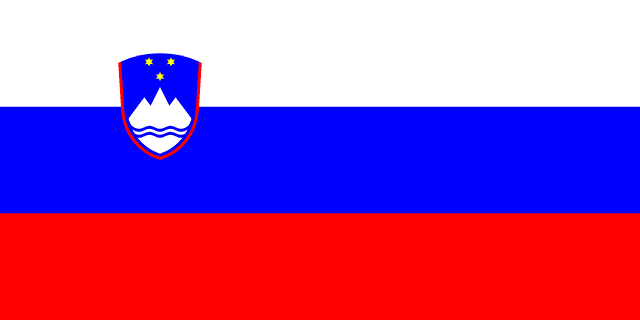
At a Glance
Alliances & Memberships
- EU
- NATO
- UN
- OSCE
- CoE
Foreign Policy Overview
Slovenia's foreign policy is deeply rooted in multilateralism, Euro-Atlantic integration, and good neighborly relations. A strong advocate for international law and human rights, Slovenia actively participates in EU common foreign and security policy, contributing to humanitarian aid, crisis management, and promoting democratic values in its neighborhood, particularly the Western Balkans. It prioritizes close cooperation within NATO for collective security and actively engages in UN peacekeeping operations. Slovenia also fosters bilateral ties with key partners such as Germany, Austria, Italy, and the US.
Key Positions on Major Issues
Climate: Supports ambitious EU climate goals, advocating for renewable energy transition and green technologies. Security: Firmly committed to NATO collective defense, and actively participates in EU security initiatives and peacekeeping missions. Human Rights: Strong defender of human rights globally, frequently co-sponsoring resolutions at the UN Human Rights Council. Trade: Pro-free trade within the EU framework, seeking to diversify export markets and attract foreign direct investment. Regional: Advocates for the EU integration of Western Balkan countries and participates in regional cooperation frameworks like the Brdo-Brijuni Process.
UN Voting Record Notes
Slovenia consistently aligns with EU positions in UNGA votes, particularly on issues related to human rights, international law, and environmental protection. For example, Slovenia voted in favor of UNGA resolutions condemning Russia's aggression against Ukraine and has supported resolutions calling for a humanitarian ceasefire in Gaza, aligning with many EU member states. Slovenia generally supports resolutions that uphold multilateralism and the Responsibility to Protect (R2P).
Economy & Trade
Slovenia possesses a developed, high-income economy with a significant services sector (around 60% of GDP), followed by industry (around 35%) and agriculture (around 2%). Key industries include automotive parts, pharmaceuticals, electronics, and chemicals. Top exports are cars, medicines, and electrical machinery; top imports are also vehicles, machinery, and pharmaceutical products. Its main trade partners are Germany, Italy, Austria, and Croatia. The currency is the Euro (EUR). Challenges include an aging population and dependence on foreign demand.
Military & Security
The Slovenian Armed Forces number around 7,500 active personnel and 800 reserves, with defense spending at approximately 1.2% of GDP in 2023, aiming for 2% by 2030. Slovenia is a full member of NATO, actively participating in its missions and operations, including enhanced Forward Presence in Latvia. It has no nuclear or WMD capabilities and is a signatory to relevant non-proliferation treaties. Key security concerns include regional stability in the Western Balkans, hybrid threats, and cybersecurity. The national defense doctrine emphasizes collective defense through NATO and maintaining interoperability.
Recent History
Slovenia declared independence from Yugoslavia in June 1991, leading to a brief Ten-Day War. Following a peaceful transition to democracy and a market economy, Slovenia steadily pursued Euro-Atlantic integration. It joined NATO in March 2004 and the European Union in May 2004, marking a pivotal moment in its post-independence trajectory. Slovenia adopted the Euro as its currency in January 2007 and joined the Schengen Area in December 2007. In 2008, Slovenia held the rotating presidency of the Council of the European Union. More recently, Slovenia was elected as a non-permanent member of the UN Security Council for the 2024-2025 term, reflecting its growing diplomatic engagement and commitment to international peace and security.
International Memberships
- UNsince 1992
Slovenia joined the UN shortly after gaining independence, leveraging its membership to assert its sovereignty and participate in global governance and multilateral diplomacy.
- Council of Europesince 1993
Accession to the Council of Europe underscored Slovenia's commitment to democratic principles, human rights, and the rule of law as part of its post-communist transition.
- NATOsince 2004
Joining NATO provided Slovenia with collective security guarantees and integrated it into the Euro-Atlantic defense structure, a key foreign policy objective after the dissolution of Yugoslavia.
- EUsince 2004
EU accession was a central strategic goal for Slovenia, driven by economic integration, political stabilization, and the desire to be part of the European family of nations, requiring extensive reforms to meet membership criteria.
- OSCEsince 1992
Slovenia's membership in the OSCE (then CSCE) was crucial for establishing its international standing and contributing to regional security and cooperation during the post-Cold War era.
MUN Negotiation Profile
Slovenia is firmly aligned with the European Union (EU) and NATO blocs, consistently voting and negotiating in concert with these groups. It also actively participates in regional initiatives like the Central European Initiative (CEI).
Slovenia typically adopts a constructive and bridge-building negotiation style, seeking consensus and pragmatic solutions within multilateral frameworks. It often aligns with like-minded EU member states and aims to promote stability and adherence to international norms. Its tactics often involve proposingcompromise texts and engaging in coalition-building to advance its positions.
- Territorial integrity and sovereignty
- Respect for international law
- Non-proliferation of WMDs
- Collective security within NATO
- "My delegation believes in the paramount importance of upholding international law and the UN Charter as the bedrock of global stability."
- "Slovenia strongly advocates for continued multilateral cooperation to address pressing global challenges, including climate change and human rights."
- "We are committed to our obligations within NATO and the EU, believing that collective security and shared values are essential for peace."
- "My delegation calls for a renewed focus on preventive diplomacy and mediation to resolve conflicts peacefully, particularly in our neighborhood."
- "Slovenia underscores the necessity of humanitarian assistance and protection for all populations affected by conflict."