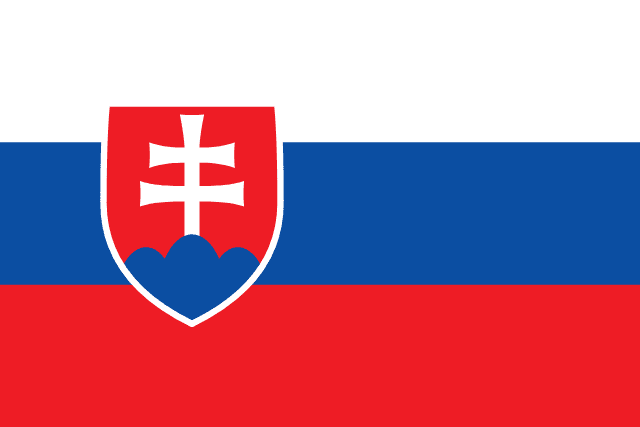
At a Glance
Alliances & Memberships
- UN
- EU
- NATO
- OSCE
- OECD
- WTO
- Council of Europe
- Visegrád Group
Foreign Policy Overview
Slovakia's foreign policy is based on its membership in the EU and NATO, emphasizing multilateralism, regional cooperation within the Visegrád Group (V4), and good neighborly relations. The country prioritizes strengthening European integration, transatlantic ties, and supporting democratic values. There has been a recent shift under the Fico government towards a more pragmatic approach, including a reevaluation of support for Ukraine and a focus on national interests.
Key Positions on Major Issues
Climate: Supports EU climate goals and the European Green Deal, advocating for renewable energy and decarbonization efforts while balancing economic impacts. Security: Strong proponent of NATO's collective defense, contributes to international peacekeeping missions, views Russia's aggression in Ukraine as a significant threat to regional security. Human Rights: Generally aligns with EU human rights standards, participates in international human rights mechanisms, though recent domestic policy shifts have drawn some scrutiny. Trade: Committed to free trade within the EU single market and global multilateral trade frameworks; highly dependent on automotive exports. Regional: Active member of the Visegrád Group, fostering cooperation on issues like migration, energy security, and regional development.
UN Voting Record Notes
Slovakia generally aligns with the EU consensus in UNGA voting. For example, Slovakia consistently voted in favor of resolutions condemning Russia's aggression against Ukraine and demanding immediate withdrawal. On matters concerning the Israeli-Palestinian conflict, Slovakia tends to support a two-state solution, often voting similarly to other EU members. On climate change resolutions, Slovakia has consistently supported global efforts for mitigation and adaptation. In human rights resolutions, Slovakia generally upholds international norms and EU positions, though some recent domestic policy considerations have led to nuanced stances.
Economy & Trade
Slovakia has an open, export-oriented economy, heavily reliant on the automotive industry, which constitutes a significant portion of its GDP and exports. Other key industries include electronics, machinery, and chemicals. Its main trade partners are Germany, Czechia, Poland, and other EU member states. The currency is the Euro (€). Challenges include labor shortages, an aging population, and the need for further diversification away from heavy industry.
Military & Security
The Armed Forces of the Slovak Republic comprise approximately 19,000 active personnel. Defense spending has been increasing and is projected to reach 2% of GDP by 2024, in line with NATO commitments. Slovakia is deeply integrated into NATO's collective defense architecture, participating in various exercises and missions. Slovakia does not possess nuclear weapons and is a signatory to the Treaty on the Non-Proliferation of Nuclear Weapons. Key security concerns include regional instability stemming from the conflict in Ukraine, cyber threats, and energy security. The military doctrine emphasizes collective defense through NATO and territorial defense.
Recent History
Slovakia's modern history is defined by its peaceful dissolution from Czechoslovakia on January 1, 1993, establishing it as an independent state. The 1990s were marked by political instability under Prime Minister Vladimír Mečiar, which hindered early integration into Western structures. Significant reforms in the early 2000s under Mikuláš Dzurinda paved the way for Slovakia's accession to NATO in March 2004 and the European Union in May 2004. In 2007, Slovakia joined the Schengen Area, and adopted the Euro as its currency in January 2009. The 2010s saw sustained economic growth but also political turbulence, including the 2018 murder of journalist Ján Kuciak, which triggered widespread protests and government resignations. Recent elections in 2023 saw the return of Robert Fico as Prime Minister, signaling a potential shift in foreign policy priorities.
International Memberships
- European Unionsince 2004
Accession to the EU was a primary foreign policy goal after independence, driven by the desire for economic integration, political stability, and alignment with Western democratic values. It has significantly shaped Slovakia's economic and legal frameworks.
- NATOsince 2004
Joining NATO provided Slovakia with collective security guarantees and enhanced its international standing. This was motivated by the need for regional security following the Cold War and a desire to integrate into transatlantic defense structures.
- United Nationssince 1993
As a newly independent state, joining the UN affirmed Slovakia's sovereignty and provided a platform for multilateral engagement on global issues like peace, security, and development.
- Visegrád Group (V4)since 1993
Cooperation within the V4 (Slovakia, Czechia, Hungary, Poland) fosters regional dialogue and coordination on issues of common interest, particularly European policy, economic development, and security, strengthening Central European influence within the EU.
MUN Negotiation Profile
Within the EU, Slovakia generally aligns with the V4 on certain issues like migration and sovereignty, but also often adheres to broader EU consensus. In the UN, it typically aligns with EU voting blocs. There are recent indications of a more independent stance on certain issues, particularly regarding Ukraine.
Slovakia often adopts a pragmatic and constructive negotiation style, seeking consensus within multilateral frameworks like the EU. While generally a bridge-builder, especially within the V4, recent shifts in government may lead to a more assertive defense of perceived national interests. It tends to form coalitions with like-minded Central European states on specific issues but also prioritizes maintaining good relations with major EU powers.
- Territorial integrity and sovereignty
- NATO collective defense principle
- National interest in energy security
- Protection of national borders
- "My delegation emphasizes the importance of multilateral cooperation within the framework of the European Union and NATO to address pressing global challenges."
- "Slovakia reiterates its unwavering commitment to the principles of international law and the peaceful resolution of disputes."
- "My delegation calls for a renewed focus on energy security and diversification, recognizing its critical role in national and regional stability."
- "We believe that climate action must be balanced with economic sustainability, ensuring a just transition for all member states."
- "Slovakia advocates for strengthened regional cooperation, particularly within the Visegrád Group, to address common challenges and foster prosperity."