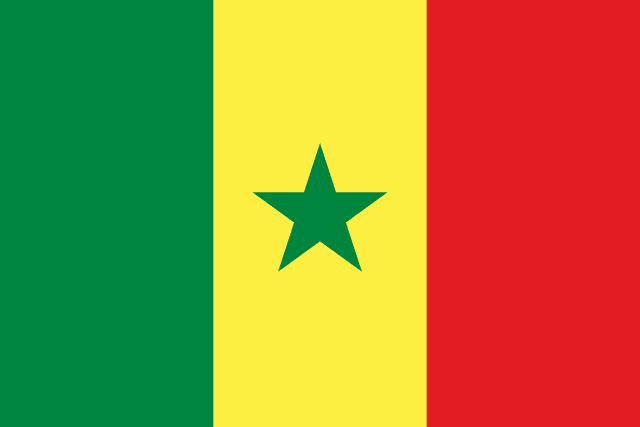
At a Glance
Alliances & Memberships
- UN
- AU
- ECOWAS
- OIF
- OIC
Foreign Policy Overview
Sovereignty pivot under PASTEF; reviewing French military presence and CFA franc; new gas exporter (2024); ECOWAS democratic anchor.
Key Positions on Major Issues
Sovereignty; Pan-Africanism; ECOWAS reform; CFA franc reform; pro-Palestine.
UN Voting Record Notes
African/OIC consensus; non-aligned shift.
Economy & Trade
Senegal is an emerging market driven by the Plan Sénégal Émergent (PSE), with a GDP heavily reliant on services (approx. 50%), agriculture, and a growing mining sector. Key exports include phosphates, gold, refined petroleum, and fish, with France, Mali, and Switzerland serving as primary trade partners. The currency is the West African CFA franc (XOF), pegged to the Euro. Recent offshore oil and gas discoveries (Grand Tortue Ahmeyim) are expected to significantly boost economic growth and energy independence through 2025.
Military & Security
Senegal maintains a professional force of approximately 19,000 active personnel, widely regarded as one of the most stable and effective militaries in West Africa. Defense spending remains around 1.5-2% of GDP, with a doctrine focused on regional stability, counter-terrorism in the Sahel, and maritime security. Senegal is a leading global contributor to UN peacekeeping missions (MINUSMA history, MONUSCO). It maintains a long-standing defense cooperation agreement with France and hosts a French military base in Dakar.
Recent History
Senegal has long been praised as a 'bastion of democracy' in a coup-prone region, though it faced significant political unrest between 2021 and 2024. The 2024 presidential election saw the victory of Bassirou Diomaye Faye, marking a peaceful transition of power following a period of high tension under Macky Sall. Foreign policy remains rooted in African solidarity, though the new administration emphasizes 'sovereigntism' and a re-evaluation of partnerships, including currency reform and mining contracts. The country continues to grapple with the security crisis in the neighboring Sahel region. Internationally, Senegal leverages its position as a stable gateway to Africa to attract diversified investment from Turkey, China, and the West.
International Memberships
- Economic Community of West African States (ECOWAS)since 1975
Founding member and key regional leader.
- Organisation internationale de la Francophonie (OIF)since 1970
Core member of the Francophone world.
- African Union (AU)since 1963
Active leader in African peace and security initiatives.
- United Nations (UN)since 1960
Host to several regional UN agencies; non-permanent UNSC member history.
MUN Negotiation Profile
African Union / Non-Aligned Movement / Francophonie
Mediation-oriented, institutionalist, and multilateral. Senegal often acts as a bridge between the Francophone West and the Global South.
- Infringement on national sovereignty regarding natural resource management (Oil/Gas).
- Withdrawal of international support for Sahelian counter-terrorism efforts.
- Opposition to any measures weakening the territorial integrity of ECOWAS states.
- "Expansion of African representation in the UN Security Council (Ezulwini Consensus)."
- "Debt relief and increased climate financing for developing coastal nations."
- "Regional cooperation to combat 'jihadist' spillover from the Sahel into coastal West Africa."