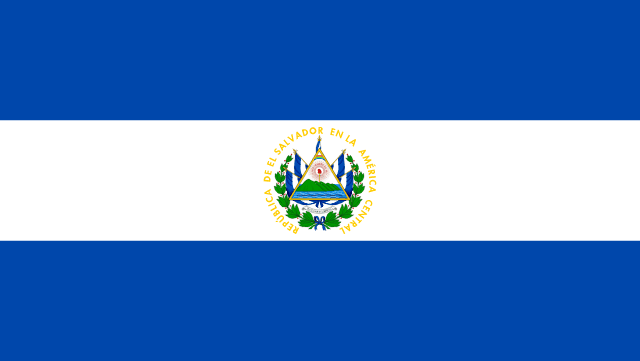
At a Glance
Alliances & Memberships
- UN
- OAS
- SICA
- CAFTA-DR
Foreign Policy Overview
Bitcoin adoption; mass-incarceration (CECOT); ties with Taiwan cut for PRC (2018); recent US prison deal under Trump.
Key Positions on Major Issues
Anti-gang; sovereignty over UN human rights criticism; closer to US under Trump.
UN Voting Record Notes
Generally Western-aligned; mixed on human rights resolutions.
Economy & Trade
El Salvador's economy is service-oriented, with services accounting for roughly 60% of GDP, followed by manufacturing and agriculture. The country transitioned to legalizing Bitcoin as legal tender alongside the US Dollar in 2021, though the USD remains the dominant currency for trade and debt. Top exports include textiles (maquila sector), sugar, and coffee, with the United States being its primary trading partner accounting for approximately 40% of exports. Remittances from the Salvadoran diaspora are a critical economic pillar, often exceeding 20% of the national GDP.
Military & Security
The Salvadoran Armed Forces (Fuerzas Armadas de El Salvador) consist of approximately 25,000 active personnel, with a significant increase in internal security roles under the Bukele administration. Defense spending has risen recently to support the 'Plan Control Territorial' aimed at neutralizing criminal gangs (maras). El Salvador is a non-nuclear state and a signatory to the Treaty of Tlatelolco. While maintaining a security partnership with the United States, the country has increasingly diversified its security and infrastructure cooperation toward China and other non-traditional partners.
Recent History
Following the 1992 Peace Accords ending a 12-year civil war, El Salvador was dominated by the ARENA and FMLN parties for decades. However, the 2019 election of Nayib Bukele disrupted the two-party system, ushering in a period of executive-led governance focused on gang eradication. In 2022, the government declared a 'State of Exception' to combat gang violence, resulting in high mass incarceration rates and domestic popularity but drawing international criticism for human rights concerns. El Salvador severed ties with Taiwan in 2018 in favor of China, signaling a shift in geopolitical alignment. In 2024, Bukele was re-elected in a landslide, cementing a mandate to continue his 'mano dura' security policies and economic modernization.
International Memberships
- United Nations (UN)since 1945
Founding member; active in regional integration and migration dialogues.
- Organization of American States (OAS)since 1948
Key regional body for political and security cooperation in the Americas.
- Central American Integration System (SICA)since 1991
Regional economic and political integration body for Central America.
- CAFTA-DRsince 2006
Comprehensive free trade agreement with the US and other CA nations.
MUN Negotiation Profile
Non-Aligned / Latin American (GRULAC); currently "El Salvador First" (Sovereigntist)
Assertive, populist, and sovereignty-focused; often skeptical of international oversight on domestic security matters.
- International interference in domestic criminal justice or emergency security measures.
- Mandatory international regulation of digital assets/cryptocurrencies.
- Inclusion of conditionalities on foreign aid related to internal judicial reforms.
- "The success of the 'State of Exception' in reducing homicide rates as a model for regional security."
- "Advocating for the rights of migrants while demanding international investment to address the 'root causes' of migration."
- "Support for technological sovereignty and the integration of Bitcoin into state financial frameworks."