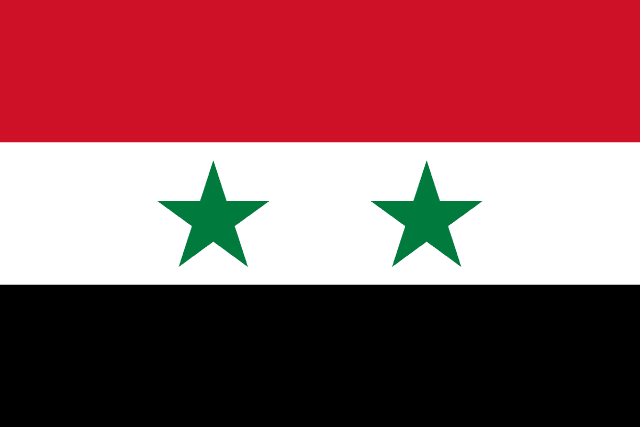
At a Glance
Alliances & Memberships
- Arab League (Reinstated 2023)
- BRICS (Applicant 2024)
- Axis of Resistance (Iran/Hezbollah)
- Collective Security Treaty Organization (Observer)
- Shanghai Cooperation Organisation (Dialogue Partner)
Foreign Policy Overview
Syria's foreign policy is anchored in the preservation of state sovereignty, territorial integrity, and the rejection of foreign-imposed regime change. The doctrine prioritizes the 'Look East' policy, deepening strategic military and economic ties with Russia and Iran as counterweights to Western hegemony. Following the 2023 readmission to the Arab League, Damascus seeks normalized ties with regional neighbors (Saudi Arabia, UAE) to facilitate reconstruction funding. A central tenet remains the recovery of the Golan Heights from Israel. The Syrian Arab Republic maintains a posture of resistance against what it terms 'state-sponsored terrorism' and illegal foreign military presence (USA and Turkey) on its soil. Relationships are defined by loyalty to those who supported the state during the civil conflict.
Key Positions on Major Issues
CLIMATE: Advocates for 'common but differentiated responsibilities,' arguing that sanctions hinder Syria's ability to transition to green energy and rebuild infrastructure. SECURITY: Immediate withdrawal of all 'uninvited' foreign forces (US and Turkish troops). Claims absolute right to eliminate 'terrorist pockets' in Idlib. HUMAN RIGHTS: Rejects the mandate of the UN Independent International Commission of Inquiry on Syria as biased and a violation of sovereignty. Claims Western sanctions constitute 'economic terrorism' and human rights violations. TRADE: Active pursuit of integration into the Belt and Road Initiative (BRI) to bypass Western financial systems. Focus on 'Sanction-Busting' cooperation with sanctioned allies. REGIONAL: Supports the Palestinian cause and the 'Axis of Resistance'; seeks an end to the occupation of the Golan Heights.
UN Voting Record Notes
Syria consistently votes with the Russian Federation and China. It voted against UNGA Resolution ES-11/1 (condemning the invasion of Ukraine) and ES-11/3 (suspending Russia from the HRC). It routinely votes against any country-specific HR resolutions targeting itself, Iran, or North Korea.
Economy & Trade
GDP (PPP): Approx $50-60 billion (pre-war estimates $120B+). Currency: Syrian Pound (SYP). Industries: Petroleum, textiles, food processing, beverages, tobacco, phosphate mining. Exports: Olive oil, nuts, fruits, vegetables, apparel. Major Partners: Russia, Iran, China, Turkey (via northern borders), Iraq, Lebanon. Note: Economy is heavily sanctioned by the Caesar Act (USA) and EU restrictive measures.
Military & Security
Forces: Syrian Arab Army (SAA), Air Force, and Navy, supplemented by National Defence Forces (NDF). Spending: Historically high, though clouded by direct Iranian/Russian subsidies. Doctrine: Hybrid warfare focusing on counter-insurgency and conventional deterrence against regional rivals. Nuclear Status: NPT signatory; Al-Kibar facility destroyed by Israel in 2007. Maintains a significant Russian military presence at Hmeimim Air Base and Tartus Naval Facility.
Recent History
The last 30 years were defined by the transition from Hafez al-Assad to Bashar al-Assad (2000), followed by a period of brief liberalization (Damascus Spring). The 2011 Arab Spring protests evolved into a complex, multi-sided civil war involving global powers and extremist groups like ISIS. Russian military intervention in 2015 turned the tide in favor of the government. By 2020, the government regained control over most major population centers. The 2023 earthquake and subsequent Arab League readmission marked a pivot toward regional reintegration and the 'frozen conflict' phase.
International Memberships
- Arab Leaguesince 1945/2023
Reinstated in May 2023 after a 12-year suspension during the civil war.
- United Nationssince 1945
Refused to cooperate with various UN-mandated investigative bodies regarding chemical weapons.
- OPCWsince 2013
Accession in 2013 under Russian-mediated deal; membership rights suspended in 2021.
- Non-Aligned Movement (NAM)since 1964
Strategic partner in the Mediterranean basin.
MUN Negotiation Profile
Pro-Russia/China, Iranian-aligned, Arab Bloc (emerging).
Highly defensive, sovereignty-centric, and transactional. Utilizes procedural delays to block unfavorable resolutions.
- Any mention of leadership change or transitional governing bodies excluding the current presidency.
- Authorization of cross-border aid mechanisms that bypass Damascus (violation of sovereignty).
- International prosecution or tribunals targeting Syrian military personnel.
- Recognition of autonomous administrations in Northeast Syria (SDF/Rojava).
- "The Syrian Arab Republic reminds this committee that any resolution failing to condemn the illegal presence of US and Turkish forces is a violation of the UN Charter."
- "Economic sanctions are the primary obstacle to the return of refugees and the realization of human rights in Syria."
- "My government will not accept humanitarian aid that is distributed through illegal border crossings without the explicit consent of Damascus."
- "External interference under the guise of 'democracy promotion' has brought only ruin to the Levant; we demand respect for our sovereign institutions."