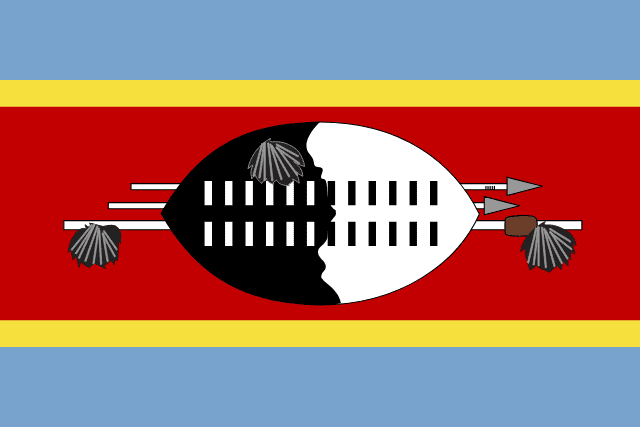
At a Glance
Alliances & Memberships
- UN
- AU
- SADC
- Commonwealth
- SACU
Foreign Policy Overview
Last African state with Taiwan ties; close South Africa economic links; democracy protests recurring.
Key Positions on Major Issues
Recognizes Taiwan (one of 12 globally); monarchy preservation.
UN Voting Record Notes
African consensus; Taiwan-related votes notable.
Economy & Trade
The economy of Eswatini is highly integrated with South Africa, which receives about 70% of its exports and provides over 80% of its imports. The GDP is driven by manufacturing (soft drink concentrates, sugar, timber) and agriculture, with the Lilangeni (SZL) pegged to the South African Rand. Key trade partners include South Africa, the EU, and the United States, particularly through the SACU revenue-sharing formula which accounts for a significant portion of government revenue.
Military & Security
The Umbutfo Eswatini Defence Force (UEDF) is a small force of approximately 3,000 personnel focused primarily on internal security and border protection. Defense spending remains around 1.5% to 2% of GDP, occasionally facing domestic criticism regarding budget allocation versus social services. Eswatini maintains a non-nuclear status and is a signatory to the Pelindaba Treaty, establishing Africa as a nuclear-weapon-free zone. The military doctrine is defensive, though it has increasingly focused on domestic stability following the 2021 civil unrest.
Recent History
The last 30 years in Eswatini have been defined by the transition to the 2005 Constitution, which reaffirmed the King's absolute power while introducing a bill of rights. The country has faced significant public health challenges, once having the world's highest HIV/AIDS prevalence, though it reached the UNAIDS 95-95-95 targets ahead of schedule. Post-2018, the country officially changed its name from Swaziland to Eswatini to shed colonial vestiges. In 2021, the nation experienced unprecedented pro-democracy protests and civil unrest, leading to a heightened focus on internal security and calls for a National Dialogue by SADC. Foreign policy remains anchored in its unique position as Taiwan’s sole African ally amidst growing Chinese continental influence.
International Memberships
- African Union (AU)since 1968
Full member; central to trade and regional security.
- Southern African Development Community (SADC)since 1980
Key regional economic and political integration body.
- Southern African Customs Union (SACU)since 1910
Essential for customs revenue and trade policy.
- United Nations (UN)since 1968
Participates in various GA and ECOSOC initiatives.
- Diplomatic Relations with ROC (Taiwan)since 1968
Only African nation to maintain full diplomatic ties with Taiwan.
MUN Negotiation Profile
Non-Aligned Movement (NAM) with strong pro-Taiwan and SADC leanings.
Conservative, royalist-led, and sovereignty-focused; prefers consensus-based regional solutions via SADC.
- Any interference in the monarchical system of government (Tinkhundla).
- Calls to switch diplomatic recognition from Taiwan to the PRC.
- Sanctions or external mandates regarding domestic police/military conduct.
- "The necessity of SACU revenue for regional stability."
- "Sovereign right to determine internal political structures without external pressure."
- "The success of the partnership with Taiwan in public health and infrastructure."