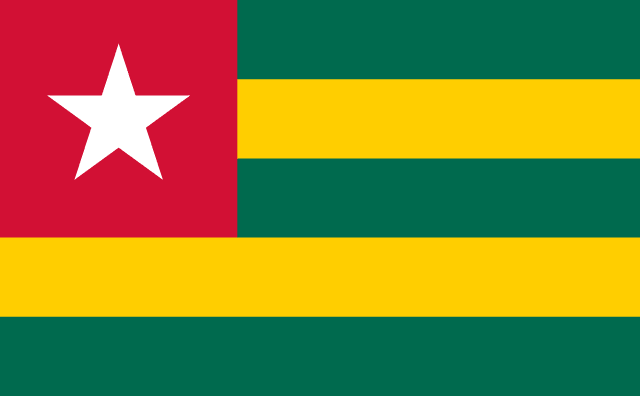
At a Glance
Alliances & Memberships
- UN
- AU
- ECOWAS
- OIF
- Commonwealth (joined 2022)
Foreign Policy Overview
Stayed in ECOWAS during Sahel crisis; mediator; phosphate exports; Sahel insecurity spillover.
Key Positions on Major Issues
ECOWAS-AES bridge; stability; pro-Palestine.
UN Voting Record Notes
African consensus.
Economy & Trade
Togo's economy is heavily dependent on commercial agriculture, which employs 60% of the labor force, and the extraction of phosphates, being the world's fourth-largest producer. The Port of Lomé serves as a critical strategic deep-water transit hub for landlocked neighbors like Burkina Faso, Niger, and Mali, making the tertiary sector a major GDP contributor. The currency is the West African CFA franc (XOF), pegged to the Euro, and top trade partners include China, India, and France. Key exports include refined petroleum, phosphates, and cotton, while the government is currently pushing the 'Togo 2025' roadmap to industrialize through special economic zones.
Military & Security
The Togolese Armed Forces (FAT) number approximately 8,500 active personnel, with a recent budgetary increase to combat the spillover of jihadist violence from the Sahel into the northern Savanes region. Togo maintains a strong defense partnership with France and is increasingly seeking security cooperation with the US and regional partners via the 'Accra Initiative.' The country is a non-nuclear state and is historically one of the top UN peacekeeping contributors per capita in Africa. Defense doctrine has shifted from internal stability to 'Active Border Defense' against non-state armed groups.
Recent History
Following the 38-year rule of Gnassingbé Eyadéma, his son Faure Gnassingbé took power in 2005, a transition initially contested but subsequently solidified through multiple elections and constitutional reforms in 2019 that reset term limits. Over the last decade, Togo has transitioned from an era of international isolation to becoming a regional diplomatic mediator, notably mediating crises in Mali and Burkina Faso. In 2024, Togo transitioned to a parliamentary system of government, a move the administration claims increases stability but critics view as a consolidation of power. Currently, the most pressing foreign policy challenge is the containment of VEOs (Violent Extremist Organizations) infiltrating from its northern borders. The country's 2022 entry into the Commonwealth reflects a strategic pivot towards diversifying its diplomatic and economic dependencies.
International Memberships
- Economic Community of West African States (ECOWAS)since 1975
Regional economic integration and security cooperation.
- Commonwealth of Nationssince 2022
Recent accession to expand trade and diplomatic ties beyond Francophone circles.
- African Union (AU)since 1963
Active member contributing to peacekeeping missions (MINUSMA post-departure efforts).
- Organisation internationale de la Francophonie (OIF)since 1970
Founding member focus on Francophone culture and development.
MUN Negotiation Profile
Non-Aligned / ECOWAS / Francophone Africa
Pragmatic, mediator-oriented, and multilateral; often acts as a bridge between Anglophone and Francophone interests.
- Violation of national sovereignty regarding counter-terrorism operations in the north.
- Any international intervention that bypasses the African Union or ECOWAS mandates.
- Sanctions that disrupt the transit-economy of the Port of Lomé.
- "Advocating for increased international funding for the 'Accra Initiative' to prevent terrorism spread to the Gulf of Guinea."
- "Demanding reform of the UN Security Council to include permanent African representation."
- "Promoting the African Continental Free Trade Area (AfCFTA) as the primary engine for post-pandemic recovery."