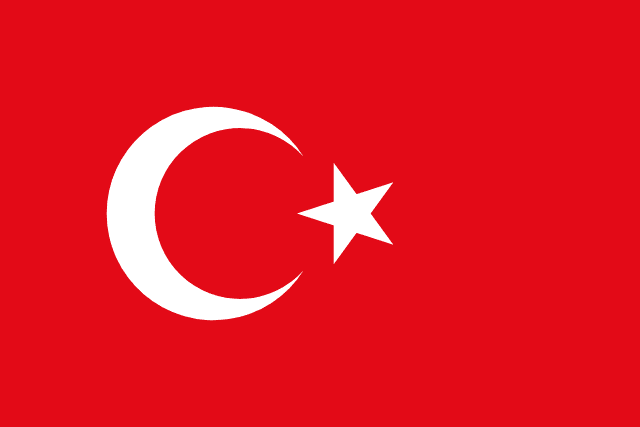
At a Glance
Alliances & Memberships
- NATO (North Atlantic Treaty Organization)
- G20
- Organization of Turkic States (OTS)
- D-8 Organization for Economic Cooperation
- MINT (Mexico, Indonesia, Nigeria, Turkey)
- Council of Europe
- OECD
Foreign Policy Overview
Turkiye pursues a multi-dimensional, 'Proactive and Humanitarian' foreign policy, often characterized as 'strategic autonomy' or '360-degree diplomacy.' As a bridging power between East and West, Ankara balances its NATO obligations with vital energy and security ties to Russia and regional leadership in the Islamic world. The policy focuses on the 'Blue Homeland' (Mavi Vatan) maritime doctrine, mediation efforts (notably the Black Sea Grain Initiative), and counter-terrorism against groups it defines as existential threats (PKK/YPG, FETO). Turkiye prioritizes regional stabilization in Syria, Libya, and the Caucasus while maintaining its long-standing, albeit strained, candidacy for EU membership. It positions itself as a voice for the 'Global South,' frequently advocating for UN Security Council reform under the slogan 'The World is Bigger Than Five.'
Key Positions on Major Issues
CLIMATE: Ratified Paris Agreement in 2021; targets Net Zero by 2053. Focuses on 'Zero Waste' initiative led by the First Lady. SECURITY: Zero tolerance for PKK/YPG/PYD entities in Northern Syria/Iraq; insists on 'safe zones' for refugee repatriation. HUMAN RIGHTS: Rejects international criticism of judicial independence; withdrew from Istanbul Convention citing 'national values.' TRADE: Seeks modernization of the EU-Turkey Customs Union; expansion of the 'Middle Corridor' Silk Road route. REGIONAL: Strong support for Azerbaijan (Nagorno-Karabakh); 'Two-State' solution for Israel-Palestine; active mediation in Ukraine-Russia conflict.
UN Voting Record Notes
Frequently votes with the OIC on Middle East issues. Consistently votes for Ukraine's territorial integrity (including Crimea) while abstaining from most sanctions-related votes against Russia. Strong supporter of UN resolutions condemning Islamophobia. Often votes against Western-sponsored human rights resolutions that target specific sovereign states (e.g., Iran or China) unless they touch on specific Turkic interests (e.g., Uyghurs, though this is balanced with China ties).
Economy & Trade
GDP Composition: Services (53%), Industry (22%), Agriculture (7%). Currency: Turkish Lira (TRY). Major Industries: Textiles, automotive, electronics, steel, construction. Exports: Vehicles, machinery, iron/steel, textiles. Primary Trade Partners: Germany, Russia, USA, United Kingdom, Italy, Iraq. GDP: Approx. $1.1 Trillion (Nominal, 2024 est.). Known for 'Anatolian Tigers' industrial growth but currently grappling with high inflation.
Military & Security
Active Personnel: ~425,000. Doctrine: 'Active Defense' and indigenous defense industry growth (notably Bayraktar TB2 drones). Budget: ~$16-20 Billion. Status: Non-nuclear, but hosts US tactical nuclear weapons at Incirlik Air Base under NATO sharing. Key concerns: S-400 vs F-35 controversy, Eastern Mediterranean maritime borders, and cross-border counter-terrorism operations.
Recent History
The last 30 years have seen Turkiye transition from a period of coalition governments and economic instability in the 1990s to the dominant era of the AK Party (since 2002). Key events include the 2001 financial crisis, the start of EU accession talks (2005), the Gezi Park protests (2013), and the failed coup attempt of July 15, 2016. The 2017 referendum significantly changed the governance structure to a Presidential system. Regionally, the Syrian Civil War (2011-present) has defined Turkish security policy, leading to multiple military incursions (Operations Euphrates Shield, Olive Branch, Peace Spring) and the hosting of the world's largest refugee population. Recently, the 2023 earthquake and 2024 economic shifts have dominated the domestic agenda.
International Memberships
- NATOsince 1952
Key member of the Southern Flank; second largest standing army in alliance.
- European Union (Candidate)since 1987 (Applied)
Candidate status since 1999; negotiations currently stalled.
- Organization of Turkic Statessince 2009
Founding member of the successor to the Turkic Council.
- United Nationssince 1945
Active member; current advocate for UNSC reform.
- Council of Europesince 1950
Member of the European Court of Human Rights jurisdiction.
MUN Negotiation Profile
Independent/Swing State; NATO-aligned but often aligns with OIC/G77 on development and Palestine.
Assertive, transactional, and status-conscious. High emphasis on national sovereignty and reciprocity.
- Recognition of the YPG/PYD as legitimate political actors.
- Infringement on Turkish maritime rights in the Eastern Mediterranean (Blue Homeland).
- Any formal recognition of the 1915 events as 'genocide' in official UN resolutions.
- Threats to the sovereignty of the Turkish Republic of Northern Cyprus (TRNC).
- "The World is Bigger Than Five; we must reform the Security Council to represent the realities of the 21st century."
- "Turkiye has shoulder the world's conscience by hosting nearly 4 million refugees; we demand equitable burden-sharing, not just empty praise."
- "We will not ask for permission to secure our borders against the PKK and its affiliates; national security is non-negotiable."
- "As a bridge between continents, Turkiye is the indispensable link for global energy security and supply chain stability."
- "We call for an immediate and permanent ceasefire in Gaza based on a two-state solution with East Jerusalem as the Palestinian capital."