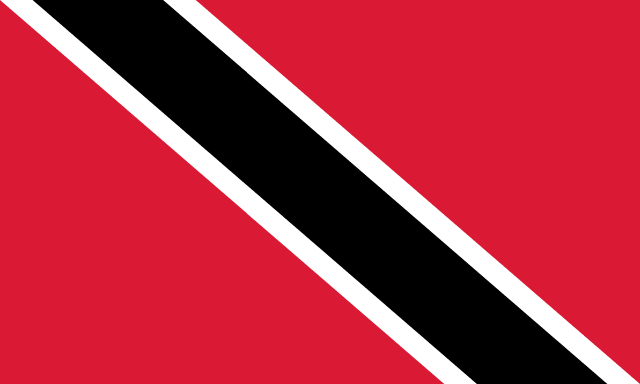
At a Glance
Alliances & Memberships
- UN
- CARICOM
- Commonwealth
- OAS
Foreign Policy Overview
Energy economy (LNG); Venezuela cross-border energy deals (Dragon gas field); Caribbean leader.
Key Positions on Major Issues
Energy security; Venezuela engagement; CARICOM; ICC supporter.
UN Voting Record Notes
CARICOM aligned.
Economy & Trade
Trinidad and Tobago has one of the Caribbean's most industrialized economies, built around natural gas, LNG, petrochemicals, ammonia, methanol, and related energy services. Services, construction, and manufacturing complement the energy sector, while agriculture is small and food import dependence remains a policy concern. The Trinidad and Tobago Dollar (TTD) is the national currency. Major export destinations include the United States, Guyana, Jamaica, and European energy markets, while imports include machinery, transport equipment, food, and refined petroleum inputs. Economic diplomacy centers on monetizing offshore gas, including cross-border opportunities with Venezuela's Dragon gas field, while managing the transition risks of global decarbonization.
Military & Security
The Trinidad and Tobago Defence Force includes army, coast guard, air guard, and reserves, with a small professional force focused on maritime security, counter-narcotics, border control, disaster response, and protection of offshore energy infrastructure. Defense spending is modest by global standards and capabilities depend heavily on patrol vessels, coastal surveillance, and cooperation with the United States, the United Kingdom, and regional partners. The country has no nuclear weapons or WMD programs and participates in Caribbean security cooperation against trafficking, organized crime, and illegal arms flows. Its doctrine is defensive and maritime-focused, reflecting its island geography and proximity to Venezuela.
Recent History
Since independence in 1962, Trinidad and Tobago has alternated between periods of energy boom and fiscal adjustment tied to oil and gas prices. The 1990 attempted coup by Jamaat al Muslimeen remains a major political-security reference point. In the 2000s, LNG expansion made the country a major gas exporter, but maturing fields and production declines later created pressure for new upstream investment. The 2010s and 2020s have been shaped by crime, public-sector reform debates, Venezuelan migration, and efforts to secure cross-border gas arrangements despite sanctions complications. Port of Spain continues to position itself as a pragmatic CARICOM voice on energy security, regional diplomacy, and international criminal justice.
International Memberships
- United Nationssince 1962
Joined shortly after independence and uses the UN to advance small-state, energy, and Caribbean security priorities.
- CARICOMsince 1973
Founding member and one of the bloc's largest economies, often influential on energy and regional trade.
- Commonwealth of Nationssince 1962
Maintains legal, educational, and diplomatic links across the Commonwealth.
- Organization of American Statessince 1967
Uses OAS channels for hemispheric democracy, security, and migration discussions.
- Association of Caribbean Statessince 1994
Hosts the ACS secretariat in Port of Spain and promotes Greater Caribbean cooperation.
MUN Negotiation Profile
CARICOM / Commonwealth / Small Island Developing States with energy-exporter interests.
Pragmatic and coalition-based; usually works through CARICOM consensus while protecting energy sovereignty and regional stability.
- Restrictions that abruptly undermine natural gas export revenues.
- Policies that ignore Caribbean security burdens from narcotics, arms trafficking, and migration.
- External pressure that blocks lawful energy cooperation with neighboring states.
- Weak recognition of small island vulnerability in climate finance debates.
- "Small island states require a realistic energy transition that protects development, jobs, and regional energy security."
- "The Caribbean cannot treat organized crime as a domestic issue only; illicit weapons and narcotics require international enforcement cooperation."
- "Trinidad and Tobago supports constructive engagement in the hemisphere, including practical solutions to migration and energy supply challenges."
- "Climate finance must be accessible to middle-income island states that still face existential physical risks."