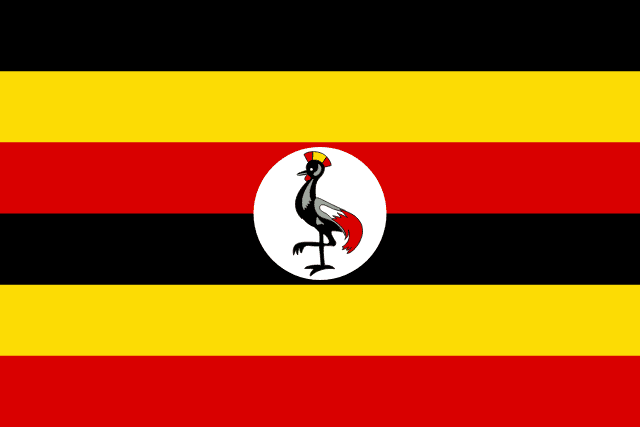
At a Glance
Alliances & Memberships
- UN
- AU
- EAC
- COMESA
- Commonwealth
- Non-Aligned (chair 2024)
- OIC
Foreign Policy Overview
Chair of NAM and G77 (2024); Anti-Homosexuality Act 2023 (Western aid cuts); deeper Russia/China ties; troops in Somalia and DRC.
Key Positions on Major Issues
Sovereignty over Western HR criticism; non-alignment; African solutions.
UN Voting Record Notes
Often abstains on Russia; African consensus; strongly pro-Palestine.
Economy & Trade
Uganda's economy is services-led but still heavily dependent on agriculture, which employs much of the population and produces coffee, tea, fish, cotton, and food crops. The Ugandan Shilling (UGX) is the national currency. Major trade partners include Kenya, Tanzania, China, the United Arab Emirates, India, and the Democratic Republic of the Congo, while exports increasingly include gold, coffee, and regional manufactured goods. Oil development around Lake Albert and the East African Crude Oil Pipeline is central to medium-term growth plans, but debt, infrastructure gaps, youth unemployment, and governance concerns remain major constraints.
Military & Security
The Uganda People's Defence Force is one of East Africa's most active militaries, with operations or deployments linked to Somalia, eastern DRC, counter-terrorism, and regional stabilization. Defense spending is moderate but politically important, and the military is deeply connected to the Museveni government's security model. Uganda has no nuclear weapons or WMD programs and participates in African Union and regional security initiatives. Its doctrine emphasizes regime security, counter-insurgency, border operations, and expeditionary deployments that give Kampala diplomatic leverage.
Recent History
President Yoweri Museveni has ruled since 1986 after the National Resistance Army took power following years of conflict. The 1990s and 2000s were shaped by recovery from civil war, conflict with the Lord's Resistance Army, intervention in the DRC, and economic liberalization. Multiparty politics returned, but elections have remained heavily tilted toward the ruling NRM. In the 2020s, Uganda has faced international criticism over political repression and the 2023 Anti-Homosexuality Act, which triggered aid and financing consequences. Kampala's hosting of the 2024 NAM and G77 summits reinforced its effort to frame itself as a Global South leader resisting Western pressure.
International Memberships
- United Nationssince 1962
Joined at independence and uses UN peace and development platforms actively.
- African Unionsince 1963
Founding OAU member and contributor to regional security initiatives.
- East African Communitysince 2000
Core regional integration platform for trade, infrastructure, and movement of people.
- Non-Aligned Movementsince 1964
Chaired NAM after the 2024 Kampala summit, emphasizing sovereignty and South-South cooperation.
- COMESAsince 1994
Supports regional market access and trade integration across eastern and southern Africa.
MUN Negotiation Profile
African Group / G77 / Non-Aligned Movement, with security partnerships across East Africa.
Assertive on sovereignty and regime legitimacy; pragmatic on security cooperation and development finance.
- Human-rights conditionality that threatens aid, security cooperation, or domestic lawmaking.
- External criticism framed as undermining African sovereignty or cultural values.
- Measures that weaken Uganda's regional security role in Somalia or eastern DRC.
- Climate rules that constrain oil development without finance and technology support.
- "Uganda speaks for a Global South that demands respect, not lectures, in matters of development and governance."
- "African security challenges require African-led solutions backed by predictable international financing."
- "Energy transition policies must recognize that new producers need development space and fair access to capital."
- "The Non-Aligned Movement remains essential for defending sovereign equality in a polarized world."