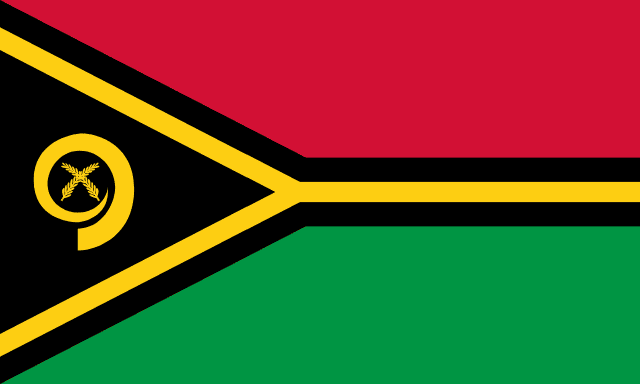
At a Glance
Alliances & Memberships
- Pacific Islands Forum
- Melanesian Spearhead Group
- Commonwealth of Nations
Foreign Policy Overview
Vanuatu's foreign policy is rooted in the principles of self-determination, non-alignment, and regional solidarity, with a strong emphasis on climate change advocacy and sustainable development. As a small island developing state (SIDS), its posture is primarily defensive, seeking international cooperation and assistance to address existential threats like rising sea levels and extreme weather events. Key relationships include Australia, New Zealand, China, and various European Union states, which provide significant development aid and security cooperation. Vanuatu actively seeks to diversify its partnerships to avoid over-reliance on any single power, maintaining a pragmatic approach to international relations. It champions multilateralism as a means to amplify its voice on global issues and protect its national interests.
Key Positions on Major Issues
Climate: Vanuatu is a vocal leader in global climate change advocacy, relentlessly pushing for stronger emissions reduction targets and greater climate finance for adaptation and loss and damage. It is at the forefront of efforts to seek an advisory opinion from the International Court of Justice on states' obligations concerning climate change. It emphasizes the disproportionate impact on SIDS and advocates for a legally binding international instrument on climate change. Security: Security for Vanuatu is intrinsically linked to climate change, resource management, and maritime surveillance. It prioritizes regional security cooperation through the Pacific Islands Forum to combat illegal fishing, transnational crime, and enhance disaster response capabilities. Vanuatu maintains a non-militarized stance and seeks external assistance for maritime security and disaster relief rather than developing significant offensive military capabilities. Human Rights: Vanuatu generally upholds human rights, with constitutional guarantees for fundamental freedoms. It advocates for the rights of indigenous peoples and the right to a clean, healthy, and sustainable environment as a human right. It participates in UN human rights mechanisms and emphasizes the importance of human dignity and cultural preservation in its national development. Trade: Vanuatu's trade policy focuses on sustainable economic growth, export diversification, and attracting foreign investment. It seeks improved market access for its agricultural and fisheries products and aims to reduce import dependencies. Participation in regional trade agreements like PACER Plus is crucial for its economic integration and development. It prioritizes fair trade practices and benefits for its local communities. Regional: Regional cooperation is a cornerstone of Vanuatu's foreign policy. It actively participates in the Pacific Islands Forum and the Melanesian Spearhead Group, promoting regional solidarity and addressing shared challenges such as climate change, maritime security, and economic development. It advocates for common regional positions on international issues to strengthen the collective voice of Pacific SIDS.
UN Voting Record Notes
Vanuatu consistently votes in line with other Pacific SIDS on issues related to climate change, decolonization, and sustainable development, often supporting resolutions calling for greater international responsibility and assistance. On Russia-Ukraine, Vanuatu has generally supported resolutions condemning aggression and upholding territorial integrity, aligning with the majority of UNGA votes (e.g., ES-11/1, ES-11/2, ES-11/4, ES-11/5) given its commitment to UN Charter principles. Regarding Israel-Palestine, Vanuatu tends to support resolutions advocating for a two-state solution and the rights of the Palestinian people, reflecting a broader non-aligned stance on this issue. On human rights, it supports resolutions promoting universal human rights, particularly those concerning indigenous rights and the right to a healthy environment. It frequently co-sponsors resolutions aimed at strengthening environmental protection and climate justice.
Economy & Trade
Vanuatu's economy is predominantly agricultural (20% of GDP), followed by services (tourism accounts for over 40% of GDP) and a smaller industrial sector. Top exports include copra, kava, timber, beef, and cocoa. Top imports are machinery, transport equipment, food, and fuels. The national currency is the Vanuatu Vatu (VUV). Principal trade partners include Australia, New Zealand, China, Fiji, and the United States.
Military & Security
Vanuatu maintains a small, lightly armed paramilitary force, the Vanuatu Mobile Force (VMF), which functions primarily as a police support and disaster response unit, with approximately 300 active personnel. There is no standing army or navy in a traditional sense. Defense spending is minimal, integrated within the police budget, and not publicly delineated as a separate military expenditure. Vanuatu has defense cooperation agreements with Australia and New Zealand, focusing on maritime surveillance, disaster relief, and training. It is a non-nuclear state and does not possess WMDs. Its security doctrine is based on regional cooperation, collective security, and a defensive posture.
Recent History
In the early 1980s, Vanuatu faced internal secessionist movements following independence, which were eventually quelled with regional assistance. The 1990s saw political instability with frequent changes in government and concerns over governance and corruption. In the early 2000s, efforts focused on economic reform and strengthening democratic institutions. The nation has been increasingly impacted by natural disasters, particularly cyclones (e.g., Cyclone Pam in 2015, Cyclone Harold in 2020), which have profoundly shaped its development trajectory and propelled climate change to the forefront of its policy agenda. In recent years, Vanuatu has navigated increasing geopolitical competition in the Pacific, balancing relations with traditional partners and emerging powers like China, while maintaining its non-aligned foreign policy and advocating for regional stability and sovereignty.
International Memberships
- United Nations (UN)since 1981
Joined shortly after independence, affirming sovereignty and multilateral engagement.
- Pacific Islands Forum (PIF)since 1971 (as South Pacific Forum)
Founding member, central to regional political and economic cooperation.
- Melanesian Spearhead Group (MSG)since 1988
Active member, promoting sub-regional economic and political cooperation among Melanesian states.
- Commonwealth of Nationssince 1980
Joined upon independence, maintaining ties with former British colonies and promoting shared values.
- World Trade Organization (WTO)since 2012
Joined after a lengthy accession process, integrating into the global trading system.
- Secretariat of the Pacific Community (SPC)since 1980
Focuses on technical assistance, scientific research, and sustainable development programs in the Pacific.
MUN Negotiation Profile
G77 + China, Alliance of Small Island States (AOSIS), Pacific Islands Forum (PIF)
Principled, persistent, collaborative, but firm on core red lines. Seeks consensus while advocating strongly for SIDS interests.
- Any proposal undermining the 1.5-degree Celsius warming limit goal.
- Attempts to dilute the principle of Common But Differentiated Responsibilities and Respective Capabilities (CBDR-RC).
- Inadequate financial commitments for climate adaptation and loss and damage.
- Proposals that threaten national sovereignty or infringe upon maritime boundaries.
- Exclusion of SIDS voices and perspectives in global decision-making processes.
- "'As a small island developing state, Vanuatu faces the existential threat of climate change daily; our very survival depends on urgent and decisive global action.'"
- "'We must uphold the principle of common but differentiated responsibilities; those historically most responsible for emissions must lead in mitigation and provide commensurate support.'"
- "'Climate finance is not aid; it is a matter of climate justice and a moral imperative for vulnerable nations to adapt and recover from irreparable loss and damage.'"
- "'The health of our oceans is the health of our people; we urge stronger action against illegal, unregulated, and unreported fishing and for the sustainable management of marine resources.'"
- "'Vanuatu calls for genuine multilateralism, where the voices of all nations, especially the most vulnerable, are not just heard but acted upon to build a more equitable and sustainable world.'"