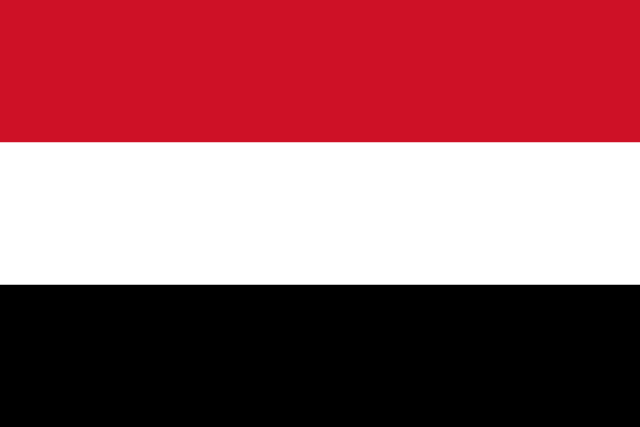
At a Glance
Alliances & Memberships
- League of Arab States
- Organisation of Islamic Cooperation (OIC)
- Group of 77 (G77)
- Non-Aligned Movement (NAM)
- United Nations (UN)
- Council of Arab Economic Unity
Foreign Policy Overview
Yemen's foreign policy is currently bifurcated between the internationally recognized Presidential Leadership Council (PLC) and the de facto Houthi authorities in Sana'a. The PLC maintains a doctrine centered on legitimacy, regional stability, and reliance on the Saudi-led Coalition for military and financial support. Its posture is aligned with the Arab League and seeks the full implementation of UN Security Council Resolution 2216. Key relationships are anchored in Riyadh and Abu Dhabi, while maintaining a firm stance against Iranian regional expansionism. The state prioritizes the restoration of state sovereignty and the lifting of blockades to alleviate the world's most severe humanitarian crisis. International engagement focuses on securing foreign aid, reconstruction funds, and a sustainable political transition through UN-mediated channels.
Key Positions on Major Issues
CLIMATE: Extremely vulnerable to water scarcity and desertification. Yemen advocates for climate financing for conflict-affected states and international technical assistance for desalination. SECURITY: Demands the disarmament of Houthi militias and the full withdrawal of foreign-backed non-state actors. Supports international efforts to secure the Red Sea (Bab al-Mandab) but emphasizes Yemeni sovereignty over its territorial waters. HUMAN RIGHTS: Consistently highlights Houthi violations, including the recruitment of child soldiers and indiscriminate shelling of civilians in Taiz. Calls for the lifting of the Taiz siege. TRADE: Seeks the removal of restrictions on commercial shipments to the ports of Aden and Hudaydah to lower food prices. REGIONAL: Rejects Iranian interference in internal affairs and supports the Two-State Solution for the Palestinian-Israeli conflict with East Jerusalem as the capital.
UN Voting Record Notes
Yemen consistently votes in favor of resolutions supporting Palestinian sovereignty. In the UNGA, it typically votes against measures criticizing the human rights records of its GCC allies. It voted in favor of ES-11/1 (2022) condemning the invasion of Ukraine, reflecting its commitment to territorial integrity, though it maintains a cautious diplomatic posture with Russia to ensure continued mediation support in the UNSC.
Economy & Trade
GDP Composition: Agriculture (20%), Industry (10%), Services (70%). Highly dependent on fluctuating oil and gas revenues (historically 70-90% of exports). Main Industries: Petroleum, food processing, leather goods. Main Exports: Crude oil, coffee, dried fish. Currency: Yemeni Rial (YER). Key Partners: China, Saudi Arabia, UAE, India. Infrastructure is severely damaged by ongoing conflict and 80% of the population requires humanitarian assistance.
Military & Security
The Yemeni Armed Forces are fractured but officially under the PLC, supported by the Saudi-led Coalition (Operation Decisive Storm). Estimated military spending is unavailable due to conflict, but heavily subsidized by GCC partners. No nuclear/WMD status. Current doctrine is defensive and counter-insurgency focused. The Red Sea security is a major priority due to the presence of Houthi maritime threats and the IRGC-linked 'Behshad' vessel activities.
Recent History
The last 30 years were defined by the 1994 Civil War, the 2011 Arab Spring protests ending Ali Abdullah Saleh's 33-year rule, and the subsequent Houthi takeover of Sana'a in 2014. The Saudi-led intervention began in 2015 to reinstate the legitimate government. In 2022, a UN-brokered truce significantly reduced violence, though hostilities persist. The 2022 formation of the PLC marked a major political shift aimed at unifying anti-Houthi factions. Recent years have seen the 'Safer' tanker salvage operation and increased tensions due to Houthi attacks on international shipping in the Red Sea (2023-2024).
International Memberships
- League of Arab Statessince 1945
Founding member; central to Yemen's regional diplomatic standing.
- Organisation of Islamic Cooperation (OIC)since 1969
Yemen aligns with the OIC on issues regarding Islamic heritage and the Palestinian cause.
- Group of 77since 1964
Platform for Yemen's advocacy on behalf of Least Developed Countries (LDCs).
- Non-Aligned Movementsince 1961
Yemen has traditionally voted with NAM on decolonization and sovereignty issues.
- United Nationssince 1947
The primary venue for Yemen to assert its international legitimacy and solicit humanitarian aid.
MUN Negotiation Profile
Pro-Saudi/GCC Bloc; G-77; Arab League.
Pragmatic and urgency-driven. Yemen often acts as a solicitor for international intervention and aid, while remaining rigid on matters of territorial integrity and legitimate authority.
- No formal recognition of the Houthi movement as a sovereign government entity.
- No partition of Yemeni territory into separate North and South states without a constitutional process.
- No lifting of arms embargos against non-state militias.
- Non-negotiable sovereignty over the Bab al-Mandab Strait.
- "The International Community must realize that Yemen's stability is the linchpin of global maritime security in the Red Sea."
- "My government demands that humanitarian aid be decoupled from political maneuvering to reach the millions in need in Taiz."
- "We call on this committee to hold the Iranian regime accountable for its continuous violations of the UN arms embargo."
- "Yemen cannot achieve a lasting peace as long as armed militias operate outside the framework of the state."
- "We urge our partners to move from humanitarian relief to sustainable development and reconstruction funding."